
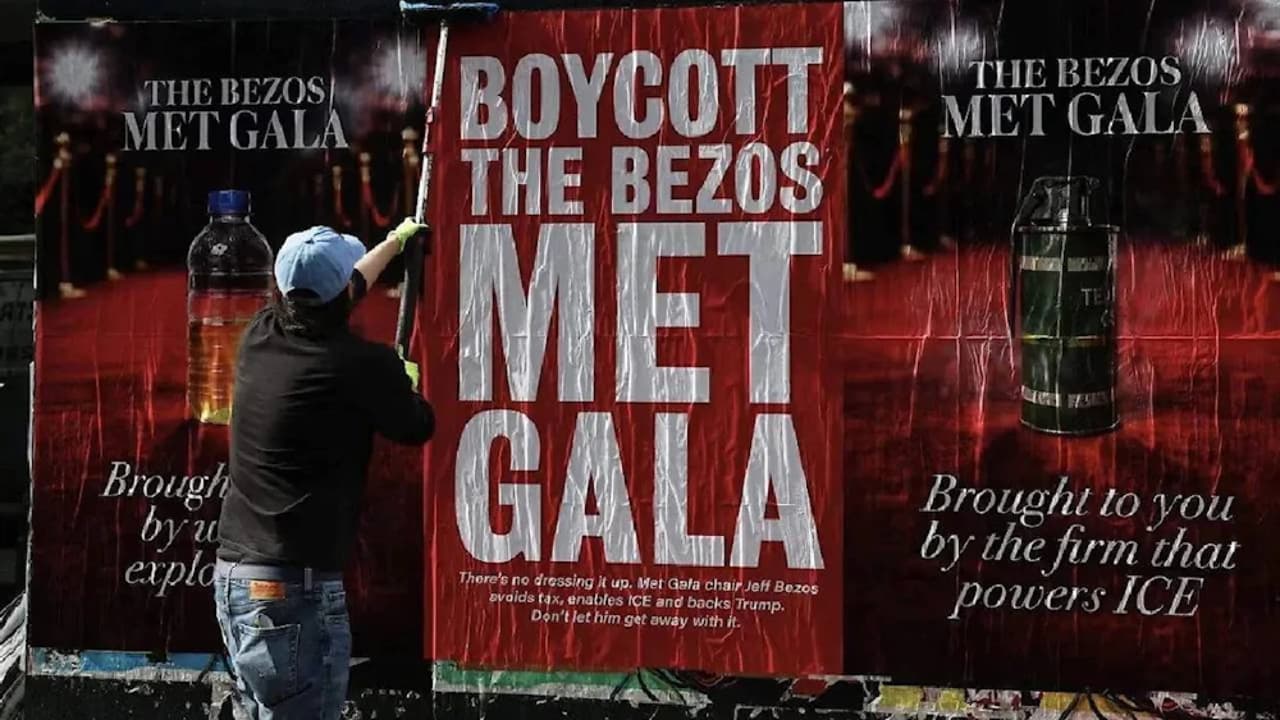
Fashion's biggest night turned into a flashpoint for protest as the 2026 Met Gala unfolded under intense public scrutiny. Held at Metropolitan Museum of Art on 4th May, the star-studded event, traditionally synonymous with glamour and exclusivity, found itself intersecting with activism and political expression. Much of the backlash centred around Jeff Bezos, whose association with the gala drew criticism from protest groups highlighting issues of wealth inequality and corporate influence.
A "Resistance Red Carpet" Emerges
At the centre of the controversy was Jeff Bezos, who served as an honourary chair and major sponsor of the gala alongside Lauren Sánchez. His involvement drew criticism from activist groups and labour organisations, who used the global spotlight of the event to voice concerns over wealth inequality and corporate practices. In a striking counterpoint to the glamour inside, protesters staged what they called a "Resistance Red Carpet," reimagining the spectacle as a space for dissent.
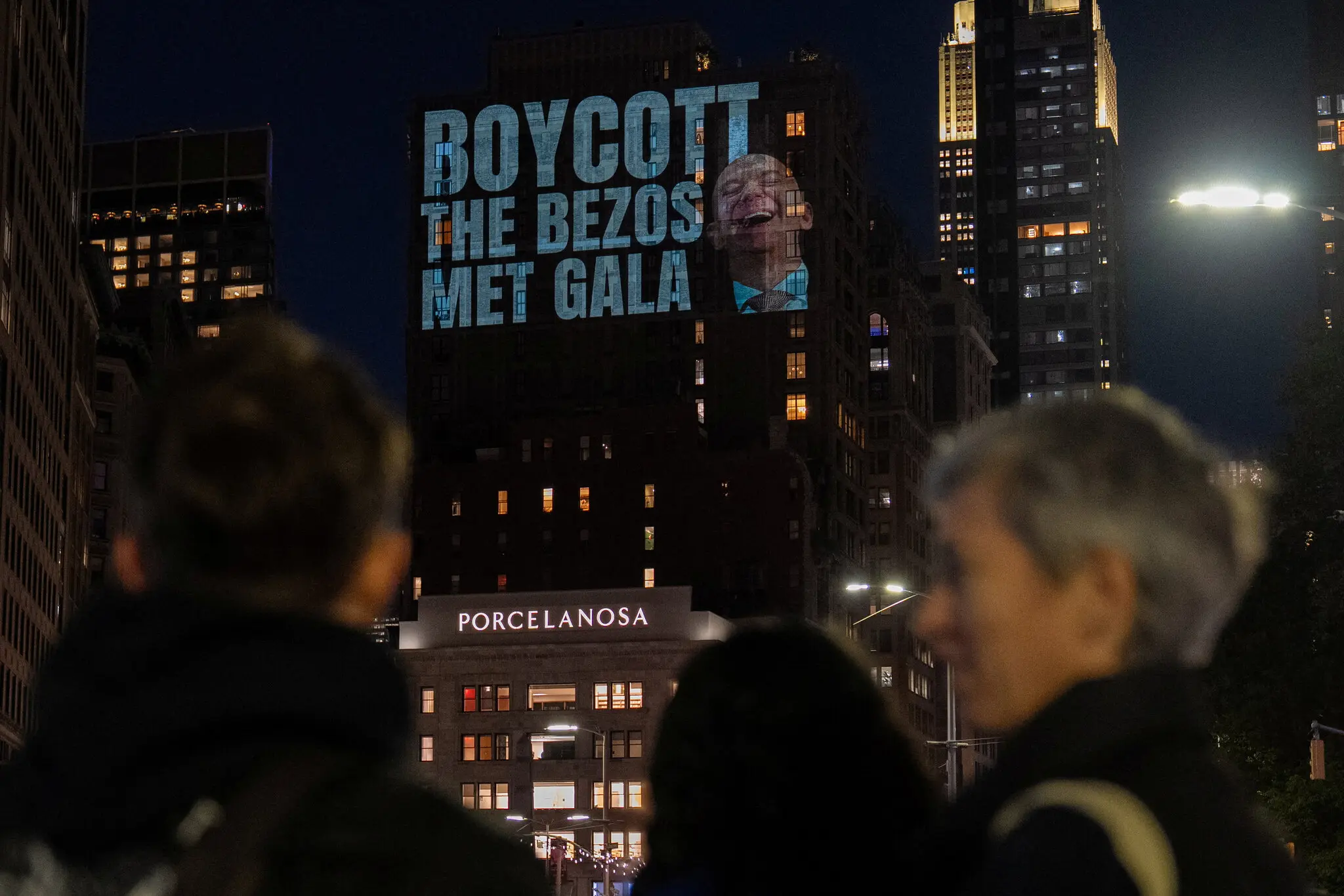
Image Courtesy: NY Times
Demonstrators held placards with slogans such as "tax the rich" and criticised the growing influence of billionaires in cultural institutions. Some activist groups went further, organising alternative events and installations across New York City to challenge the narrative of luxury and exclusivity associated with the gala. These efforts aimed to highlight what critics see as a widening gap between elite cultural spaces and everyday realities.
Art, Activism and Cultural Power
The protests were not limited to physical demonstrations. Activists projected messages onto buildings, circulated social media campaigns, and staged symbolic acts designed to draw attention to labour issues linked to Amazon. The Hollywood Reporter noted that these movements effectively created a parallel "gala" of their own, one rooted in activism rather than couture.
By leveraging the same visibility that makes the Met Gala a global phenomenon, protesters sought to reclaim cultural space and redirect the conversation toward accountability and ethics.
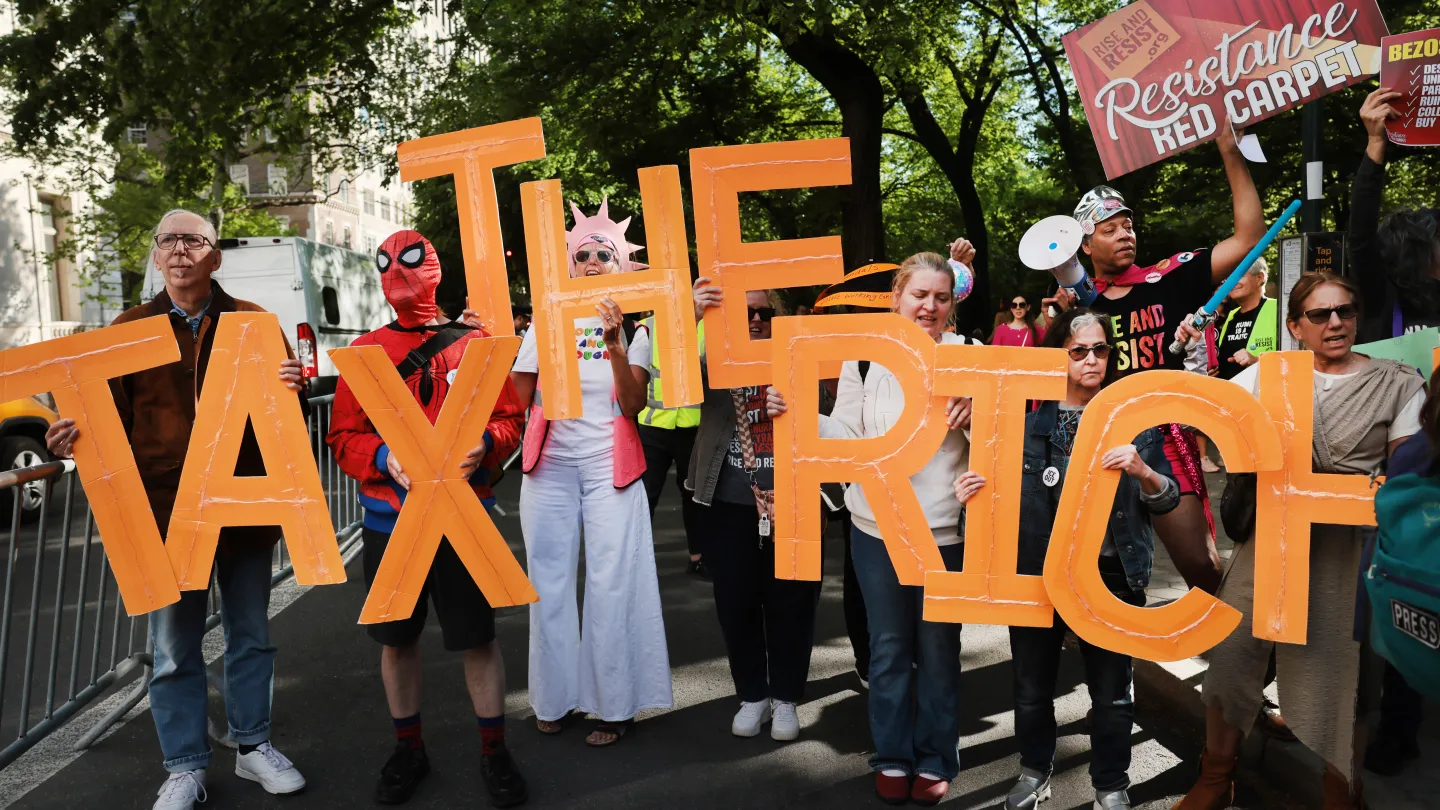
Image Courtesy: The Hollywood Reporter
The backlash sparked mixed reactions within the fashion and entertainment industries. While some public figures expressed support for the protests, others defended the event's role as a fundraiser for the museum's Costume Institute. Organisers emphasised that the gala remains a crucial source of funding for the arts, with proceeds supporting exhibitions and preservation efforts.
At the same time, critics argued that such funding should not come at the cost of endorsing controversial figures or ignoring systemic issues.
A Turning Point for Fashion's Biggest Night
Despite the protests, the gala itself continued as planned, with celebrities embracing the theme and delivering headline-making fashion moments. However, the demonstrations ensured that the conversation extended far beyond red carpet looks.
This year's event highlighted a shifting dynamic: the intersection of fashion, wealth, and social responsibility is becoming increasingly difficult to ignore. As the Met Gala evolves, it is no longer just a celebration of style. It is also a stage where cultural power, privilege, and protest collide.
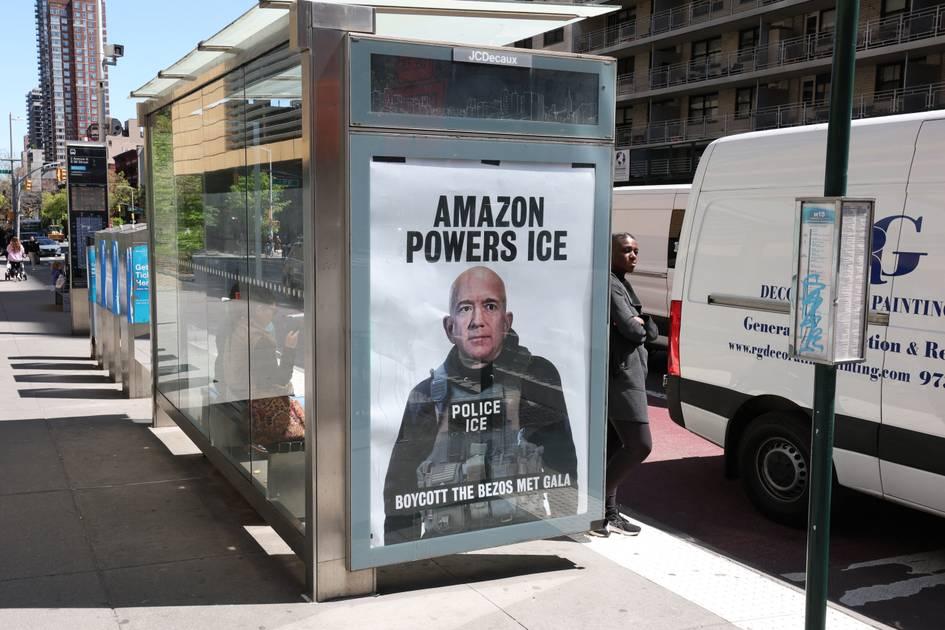
Image Courtesy: Fashion United
The 2026 Met Gala may ultimately be remembered not only for its couture but for the conversations it sparked. By challenging the presence of powerful figures like Bezos, activists have signalled a broader demand for accountability within elite cultural spaces. As fashion continues to intersect with politics and public discourse, events like the Met Gala are likely to face increasing scrutiny. In this new landscape, glamour alone may no longer be enough to define the night.